

Month: March 2026

A Guide to the Dwarf Planets
The solar system is full of wonders. Although most assume that there are just eight major planets. But did you know that there is a whole group of ‘dwarf planets’ out there? These five different official dwarf planets (some of which are located in the far-off asteroid belt) offer more fun and interesting learning opportunities than most people think.
In 2006, the International Astronomical Union issued a definition of a ‘dwarf planet’ concerning what a planet is. And so to be considered a planet, the object must accomplish the following tasks:
- Orbit the Sun
- Be mostly spherical
- Clear out other objects near its orbital path
Dwarf planets may be able to accomplish the first two goals of being a planet, but they do not accomplish the third. This is the true definitional difference between a planet and a dwarf planet.
The dwarf planets in order of their proximity to the Sun are: Ceres, Pluto, Haumea, Makemake, and Eris. Let’s explore them!
Ceres

Ceres is in the asteroid belt between Mars and Jupiter. It has a diameter of about 952 kilometers. And that makes it the smallest of the five dwarf planets. Even so, it is the largest object in the asteroid belt. About 32% of the belt’s total mass is made up by Ceres.
Ceres is believed to have a rocky crust and an icy interior. There may even be a solid core at the center. About a quarter of Ceres’s mass is estimated to be ice. The Dawn spacecraft also captured images of bright spots on its crust. Those bright spots are believed to be salt deposits.
Salty water leaked up from below and left them behind after drying out. How that water got there is still a mystery. Ceres is named after the Roman goddess of farming, and a fun fact, the word “cereal” comes from that same name.
Pluto
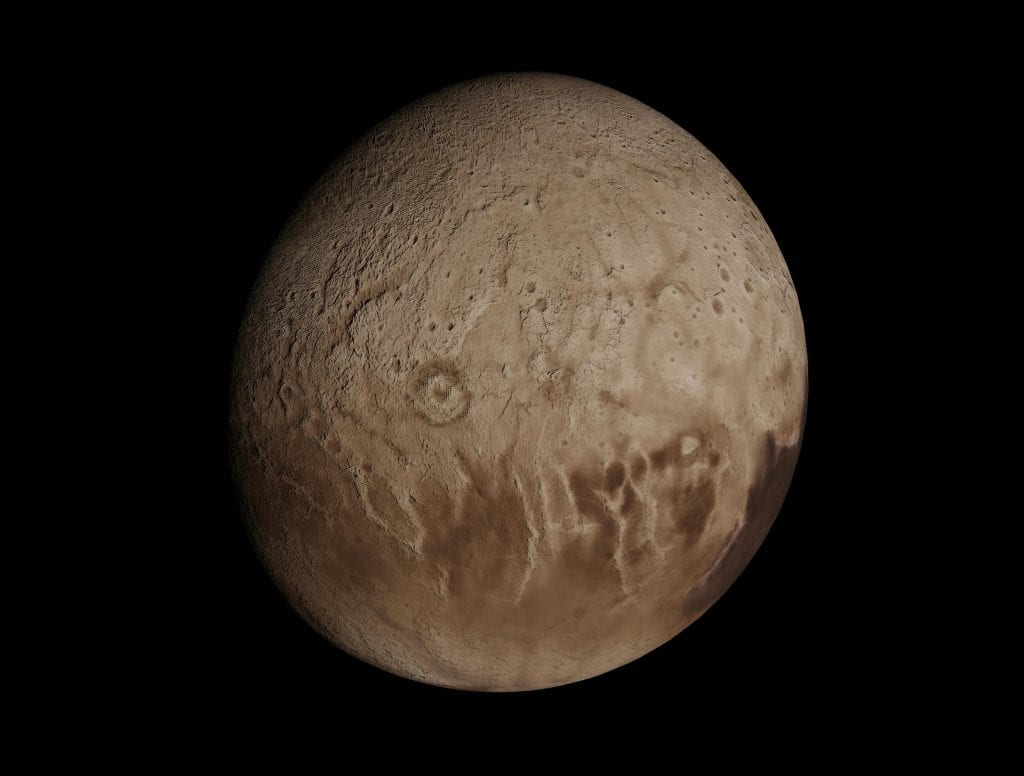
Pluto might be the most famous demotion in history. For 76 years, it was our ninth planet. Then, in 2006, the International Astronomical Union bumped it down to a dwarf planet. People got upset. They made memes. Teachers had to rewrite lessons. It was a whole thing.
Pluto is about 2,380 kilometers wide, roughly two-thirds the size of Earth’s Moon. NASA’s New Horizons spacecraft flew past it in 2015. What it found was a shock. Young ice mountains, a giant heart-shaped region of frozen nitrogen, and strange red patches of complex molecules. Pluto looked nothing like anyone expected.
Scientists also believe Pluto may once have had a liquid ocean beneath its surface. There is even a chance that some water is still there today. Pluto has five moons, and all of them carry underworld-themed names. A massive crash occurred long ago, and debris was hurled into space. Later, that debris likely coalesced into those moons.
Haumea

Haumea is one of the most unusual objects in the solar system. It spins at a wild speed. One full rotation takes just four hours. Its shape was pulled out into something like an egg by its rapid spin. Its longest side measures about 2,322 kilometers. Once you picture that, Haumea stops looking ordinary very quickly.
Haumea has a ring system and two moons. Astronomers discovered the ring in 2017 when Haumea passed in front of a star. The starlight dropped in a way no one expected. A ring best explained that small drop. Haumea was named after the Hawaiian goddess of fertility. And for an object so strange, that name gives it even more character.
Makemake
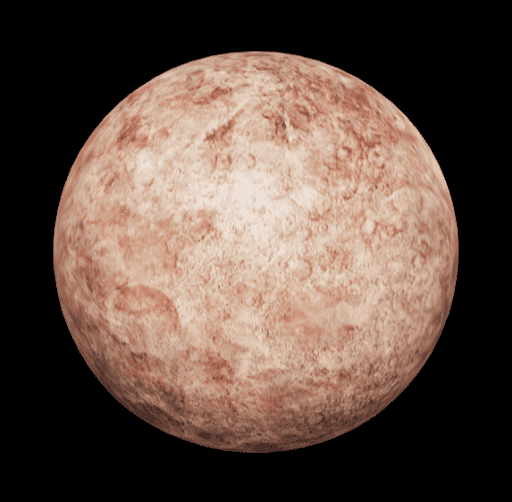
Makemake does not draw much attention, yet it has plenty to offer. Its day lasts about 22.5 hours. That makes it surprisingly close to Earth in one small detail. The surface appears reddish-brown and may be coated with frozen methane pellets. It is about 1,426 kilometers wide. So if you compare sizes, it is bigger than Ceres and smaller than Pluto.
The Hubble Space Telescope found a small moon orbiting Makemake. That moon is named MK2. While Makemake is bright, MK2 is very dark in comparison. Scientists think its surface is composed of ice, that small amounts sublimate into space, and that, over time, a darker surface is left. Makemake is named after the Rapa Nui god of fertility from Easter Island in the Pacific.
Eris
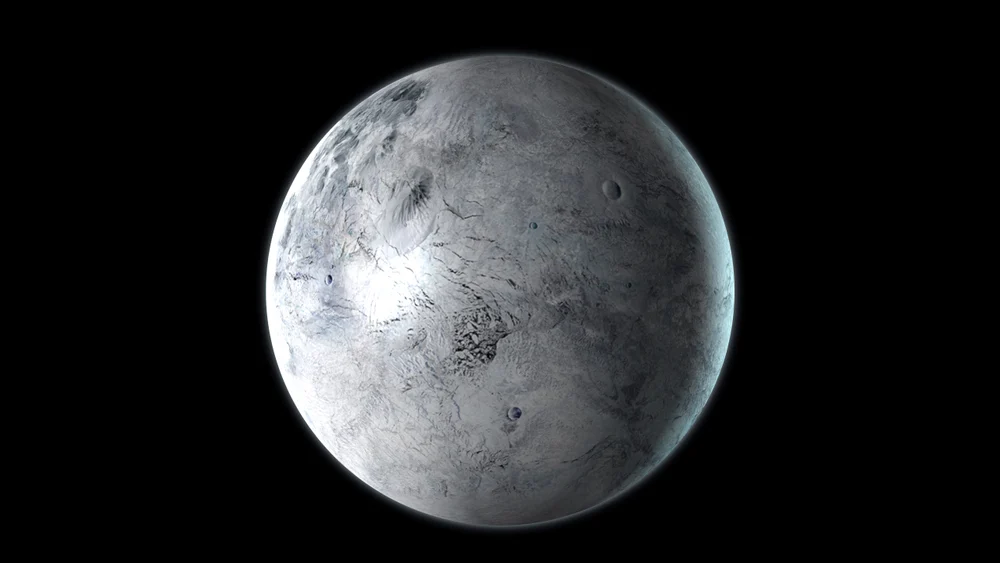
Eris is almost 68 times farther from the Sun than Earth. Although it is 2,330 kilometers wide, almost the size of Pluto, scientists used to think Eris was larger than Pluto. That was the initial error that sparked the 2006 controversy, altering Pluto’s place in the solar system. Eris is named after the Greek goddess of discord, a most appropriate name.
Eris has one moon, Dysnomia. The atmosphere of Eris most likely freezes and falls to the surface of Eris when Eris is further away from the Sun. When Eris is closer to the Sun, that frozen atmosphere becomes a gas again.

