

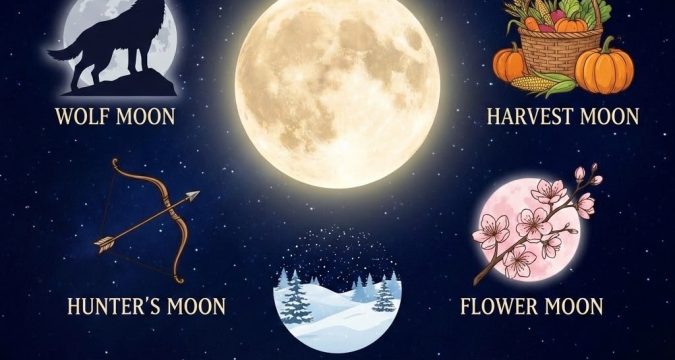
Have you ever heard someone say “the Wolf Moon is rising” and had no clue what that meant? If that is the case, you are not alone in that. Full moons have been given special names for thousands of years. And each name hides a special story about nature, the seasons, and also life in a very different time.
Most of these names were given by Native American tribes. They used the moon like a clock and a calendar. So the night sky was read the way a schedule is read. Each full moon was linked to a shift in nature. Planting was timed. Hunting was planned. Cold weather was prepared for. Later, the names were adopted by Colonial Americans. Now they are heard as part of normal sky talk. And if you have heard them, the same old system has been passed on to you.
Here’s a look at each month’s full moon name and what it actually means:
January — Wolf Moon
During midwinter, hungry wolves were heard in the distance. Food was hard to find. So their calls were sent across empty fields. That is how January’s moon was named, and you can see the scene without much effort.
February — Snow Moon
Throughout most of February, heavy snow fell across North America. The moon was named after what was covering everything. In some areas, the storm moon name was used. The hunger moon name was used too. If you have been caught in a long winter, you and I know how those names were earned.
March — Worm Moon
When the ground began to thaw, worm trails were left in the soil. This sign was noticed year after year by Native Americans. It was treated as a marker that winter was ending—a small detail, yet it was trusted.
April — Pink Moon
The moon is not painted pink. The name was taken from a small wildflower that blooms early in spring. It is a small joke in the name. Still, the timing was useful, so the name stayed.
May — Flower Moon
By May, flowers are seen in many places. So the name was given. Some tribes also called it the corn planting moon.
June — Strawberry Moon
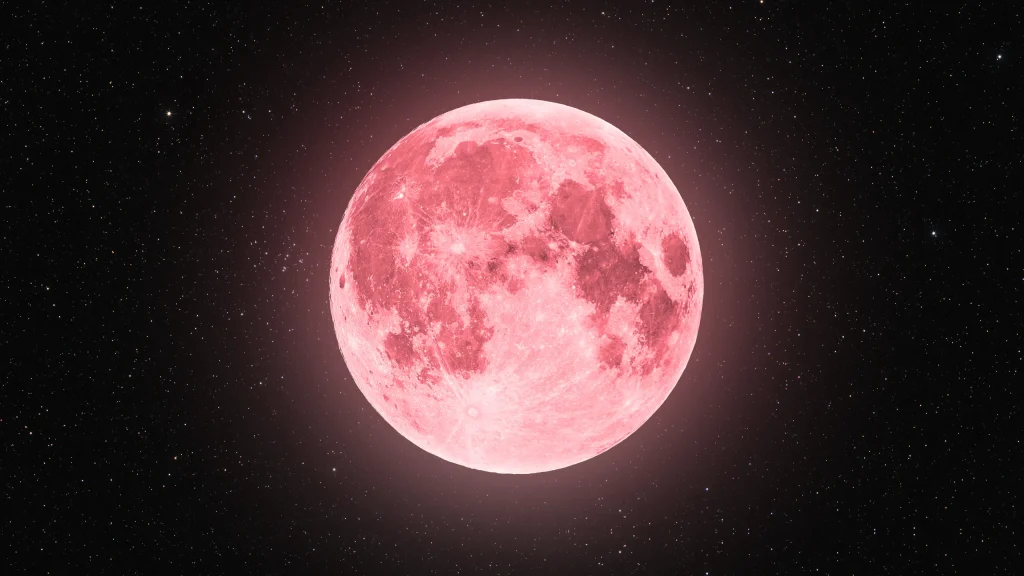
Strawberry season kicked off in June across North America. Europeans called it the rose moon instead. Both names feel right for early summer.
July — Buck Moon
Male deer start growing back their antlers in July. That yearly cycle gave this moon its name. Some also call it the thunder moon, after summer storms.
August — Sturgeon Moon
Fishing tribes noticed sturgeon appeared in big numbers in August. The moon got named after the catch of the season—simple logic.
September — Corn Moon / Harvest Moon
By September, crops were ready for harvest. The moon rose bright and early. That extra light was used for work after dark. When this moon is set closest to the fall equinox, the name Harvest Moon is used. It was kept because it fit.
October — Hunter’s Moon
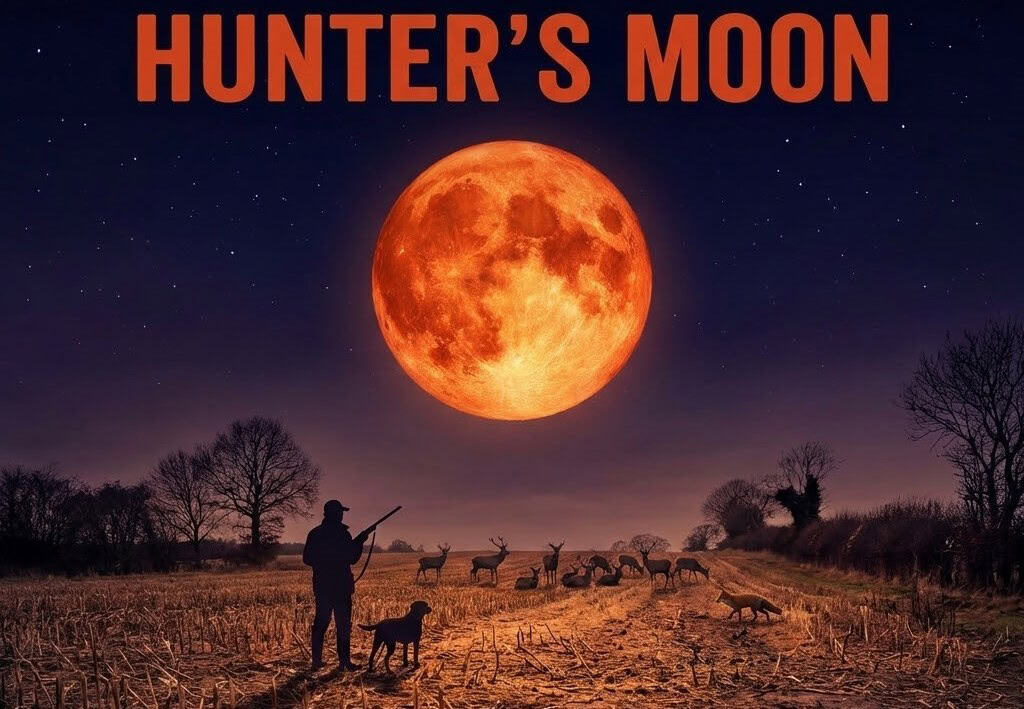
Bare fields after harvest left deer and fox with nowhere to hide. Hunters used the bright October moon to track prey deep into the night.
November — Beaver Moon:
Beavers were busy in November. Some say tribes set traps during this time. Others say beavers rushed to build their winter dams. Either way, beavers were clearly having a hectic month.
December — Cold Moon
Winter arrives. Nights stretch long. The name says it all.
Now what about the Blue Moon? Every two and a half years, you will notice that an extra full moon shows up in the calendar. That thirteenth moon earned the nickname “blue moon.” Nothing to do with color — it’s just a rare extra one that sneaks into the year.
These names are more than fun facts. They show how closely people once watched the sky — no phone apps, no weather forecasts, just the moon telling them what came next.

